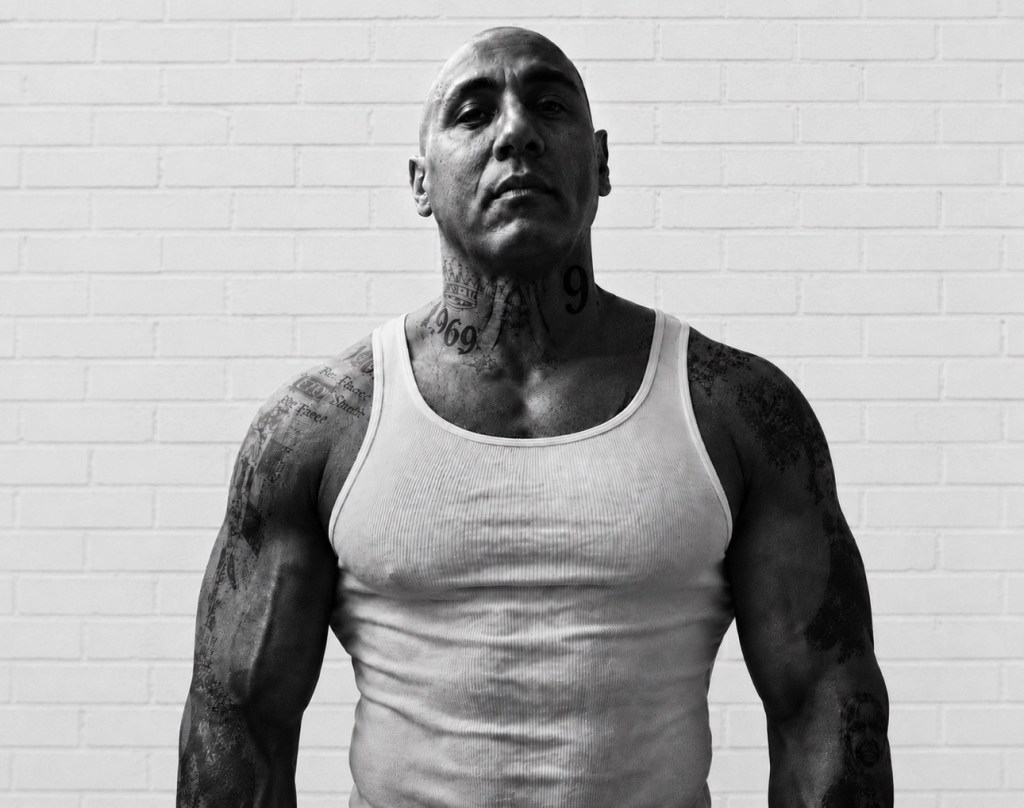
by Anonymous
February 18th, 2025
The city never really slept. It just changed hands.
When the sun went down, the corners belonged to crews in black hoodies and stolen cars. But when the prison lights flickered on miles away behind razor wire and concrete, the real orders were already moving through burned phones, coded letters, and whispered messages carried by loyal soldiers.
Everybody on the outside knew one name.
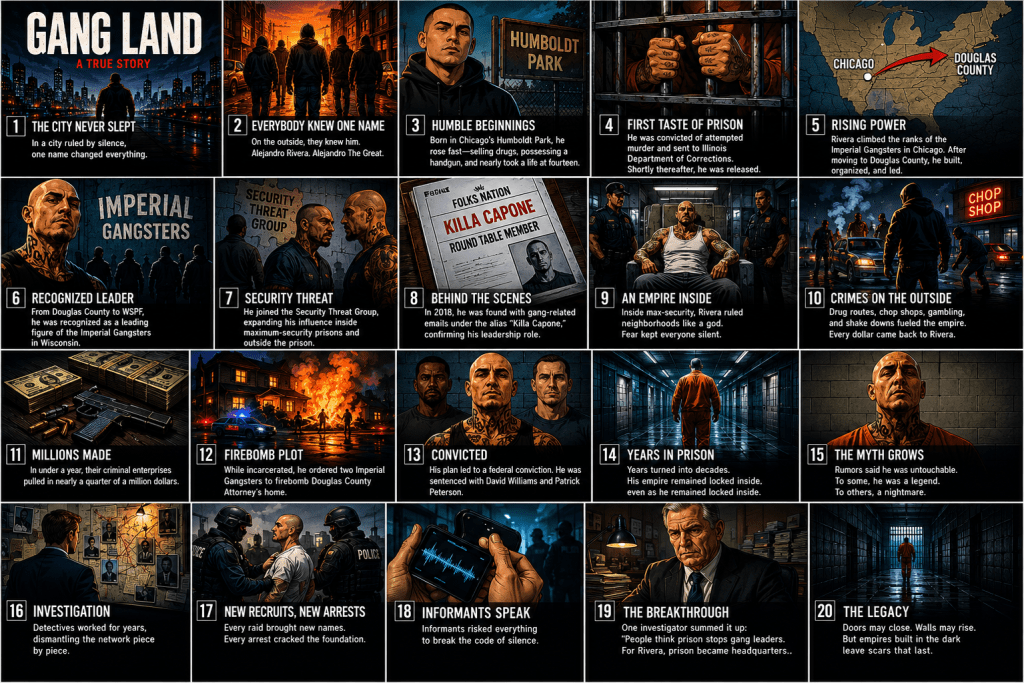
Alejandro Rivera also known as Alejandro The Great.
Born and raised in Chicago’s notorious Humboldt Park region. He caught his first case at thirteen years old for selling drugs and possession of a handgun. When he was almost fourteen, he was charged with attempted murder and was convicted of manslaughter. That was his introduction to Illinois department of corrections. Shortly thereafter he was released.
Rivera held rank within the Imperial Gangsters in Chicago. After relocating to Douglas County, he established and organized the Imperial Gangsters there, activities which ultimately resulted in his homicide conviction. Due to his documented gang involvement, he was transferred directly from Douglas County to WSPF. Rivera is recognized as a leading figure of the Imperial Gangsters within the state of Wisconsin. While incarcerated at WSPF, he has demonstrated an ability to influence and manipulate other inmates. His leadership role within the Security Threat Group known as the Imperial Gangsters, combined with his influence over other inmates, presents an ongoing security risk to the institution.
In 2018, Rivera was discovered to be in possession of gang-related email communications intended to be distributed to members of the Folks Nation. The email identified Rivera, also known as “Killa Capone,” as an appointed “Round Table Member” within the Folks Nation organization. Authorities also found an email showing Rivera’s acknowledgment and acceptance of this position, along with a photograph of the “Almighty Imperial Gangsters Nation” leadership chart that listed Rivera as part of the organization’s leadership structure. These documents demonstrate Rivera’s active involvement and participation in gang-related activity, specifically with the Folks Nation and Imperial Gangsters.
Even locked inside a maximum-security prison, Rivera controlled entire neighborhoods like a God sitting on a concrete throne. Guards feared the silence that followed his stare. Rivals feared the consequences that came after his phone calls.
Young gang members treated his words like commandments. From his prison cell, Rivera orchestrated an empire.
Drug routes stretched across city lines. Stolen luxury cars disappeared overnight into chop shops. Illegal gambling houses operated behind laundromats and smoke shops.
Every crew kicked money upward, and every dollar eventually traced back to Rivera and the prison council that ruled beside him.
In less than a year, their criminal enterprises pulled in nearly a quarter of a million dollars.
While incarcerated, he was accused of ordering two Imperial Gangsters to firebomb Douglas County Attorneys home. As a result of that he has spent a lot of time in super max custody. His first serious conviction in the state of Wisconsin was a result of two federal informants, David Williams and Patrick Peterson, cooperation against him and his family.
According to fictional conduct reports, investigators claimed Rivera once wrote in a letter that he was the only board member for the Latin Folks organization in the state of Wisconsin. The report further described him as a powerful leader within the Imperial Gangsters who allegedly directed another inmate to attack a suspected member of the Vice Lords inside the institution.
The report claims Rivera initially acted as a lookout while the assault unfolded. But when the identified Vice Lord reportedly began fighting back, Rivera allegedly rushed forward himself and stabbed the inmate during the chaos. The victim was said to have suffered serious injuries and required emergency transport to a hospital for treatment.
To prison officials, Rivera represented more than just another gang member – he represented influence.
Another report in the story stated Rivera was discovered in possession of a contraband cell phone, something authorities considered an extreme threat both to the prison and to the public. Investigators believed the device allowed him to continue directing criminal activity outside the institution, communicate with gang members on the streets, and maintain control over operations despite being incarcerated. And that was what made Rivera feared most.
Prison was supposed to isolate men like him.
Instead, it became headquarters.
Inside prison walls, Rivera sat calm and expressionless while younger inmates watched him like he was something larger than human. Rumors spread that he remembered every betrayal, every unpaid debt, every whispered insult from the outside.
Some believed he had become more myth than man.
Detectives spent years trying to dismantle the network, but every arrest created two new recruits. Every raid only proved how deep the organization reached. Informants vanished. Witnesses refused to speak. Fear moved faster than the law.
One veteran investigator finally said it best:
“People think prison stops gang leaders. For Rivera, prison became headquarters.” And somewhere behind steel doors and concrete walls, Alejandro Rivera smiled while the empire of Gang Land kept growing in the dark.
Authors note: This article is based on a review of multiple conduct reports, interviews with department staff, and various law enforcement.

 Alejandro Rivera